2 hr 30 min
Gdańsk History & Architecture Walking Tour
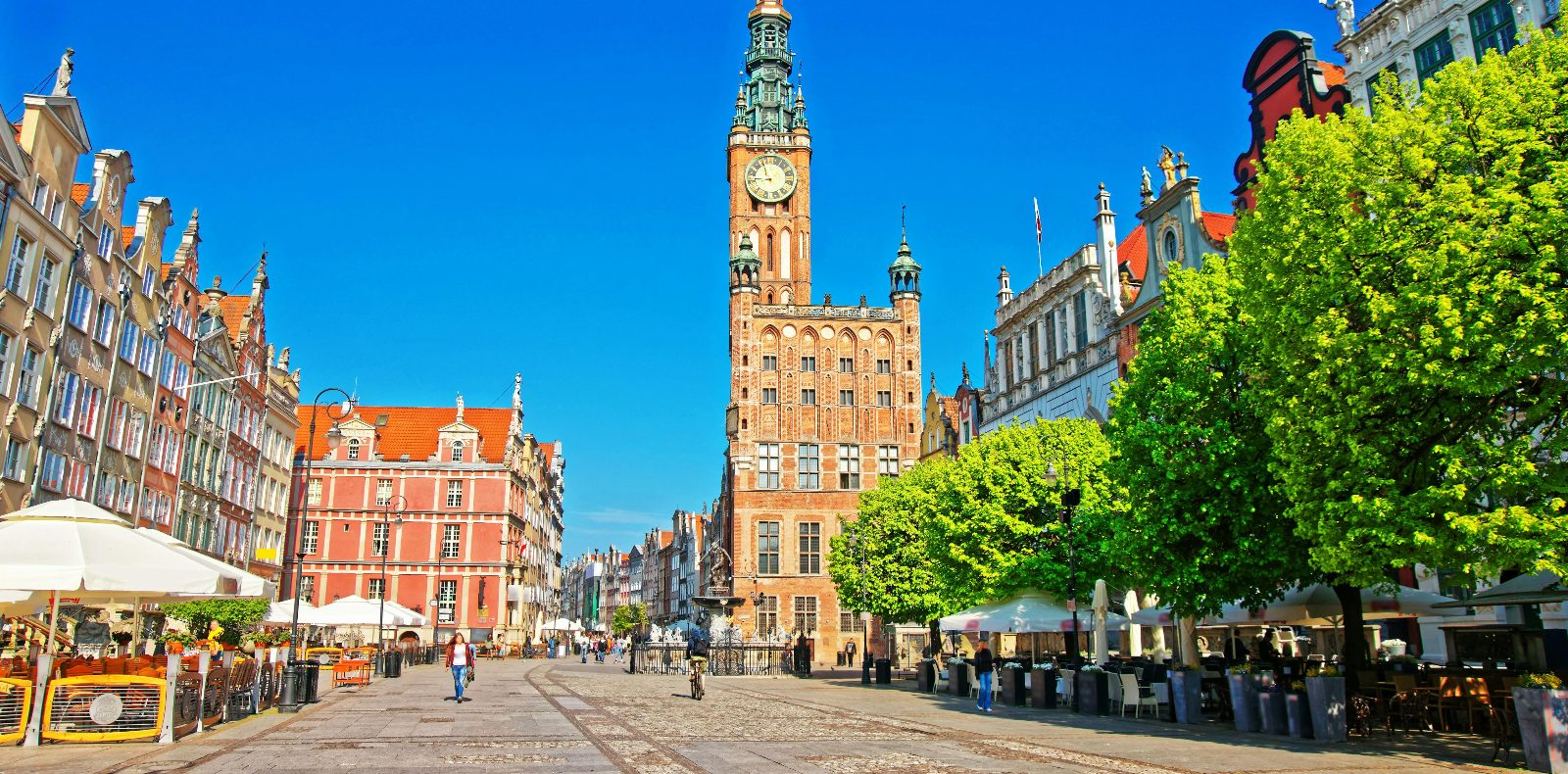
Trace the royal route through centuries of Baltic trade, war, and revolution on this immersive city walk
Reserve
Amber facades and maritime memory, traced in brick and stone.
Hand-picked by our editors — only the best 12 walking experiences from 47 reviewed.
Verified partners for Gdansk Walking tours, free cancellation where available, and instant confirmation on every booking.
2 hr 30 min
Trace the royal route through centuries of Baltic trade, war, and revolution on this immersive city walk
Reserve
1 hr
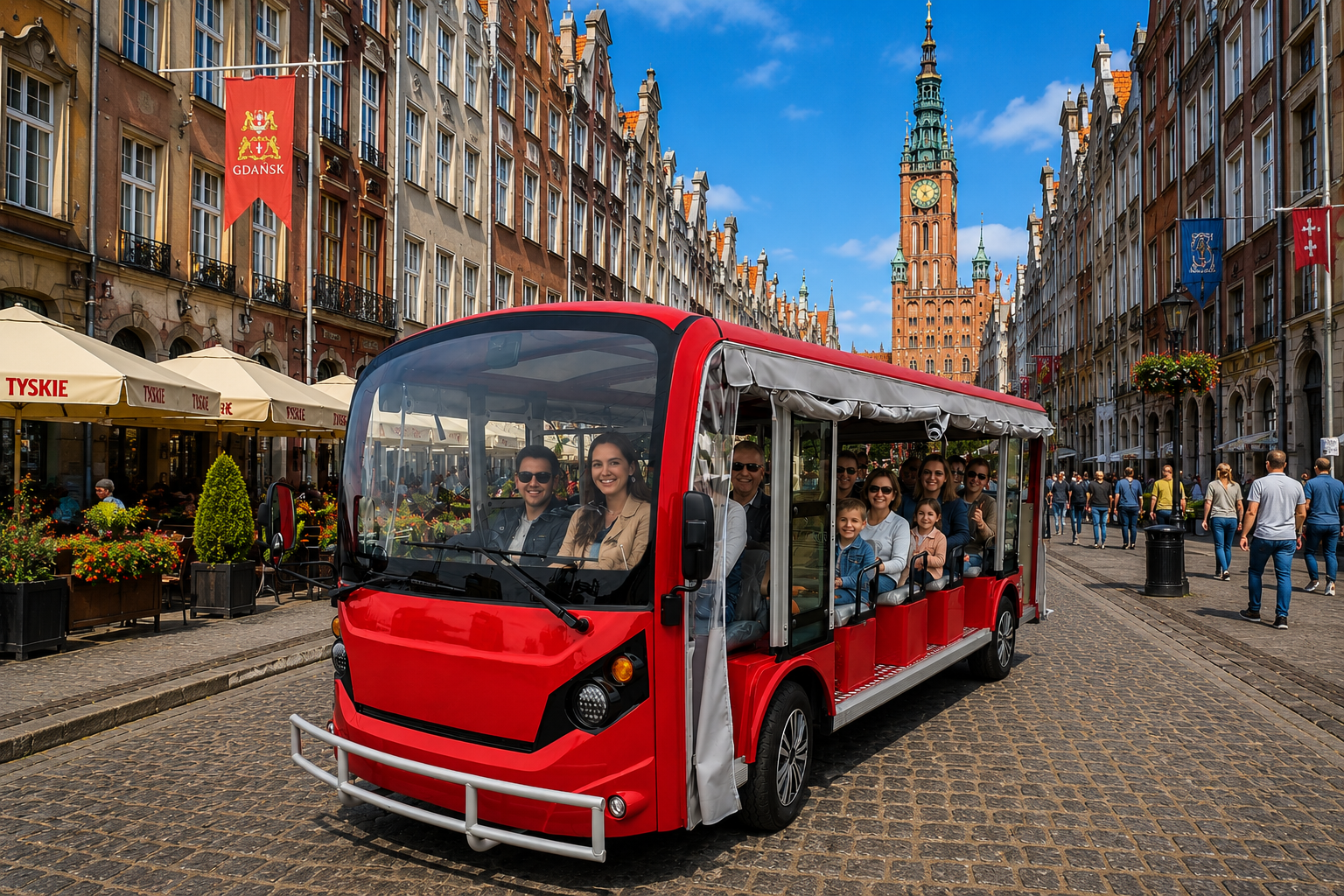
Glide through Old Town's cobbled lanes in a heated electric cart with a local guide
Reserve
2 hr
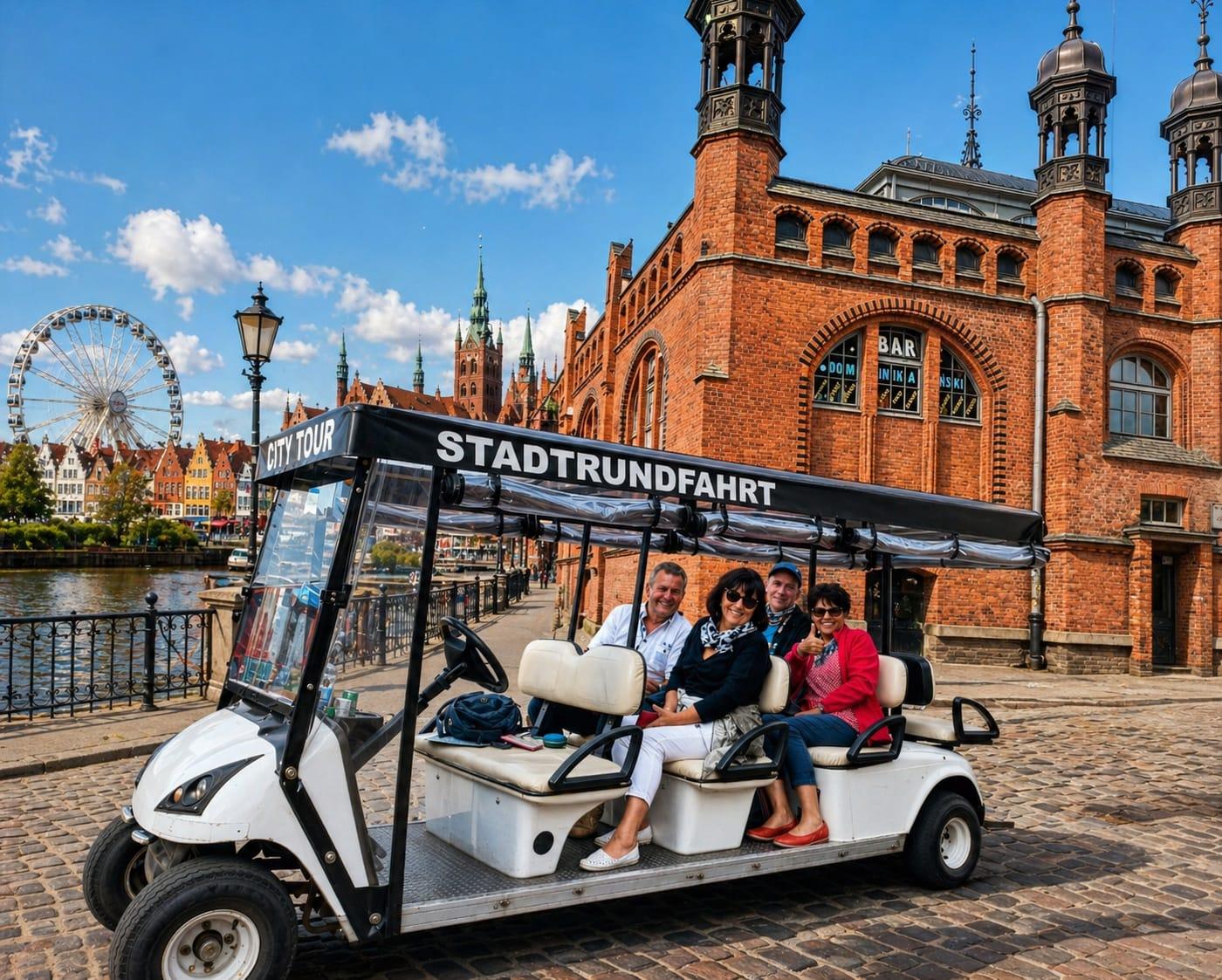
Explore Gdansk's historic landmarks aboard a comfortable golf cart with a live guide sharing the city's thousand-year story.
ReservePrices from verified partners. Availability updates in real time at checkout. Free cancellation policies apply where shown.
The landmarks, rooms, and views travelers on Gdansk Walking tours remember — all visible on a single visit.
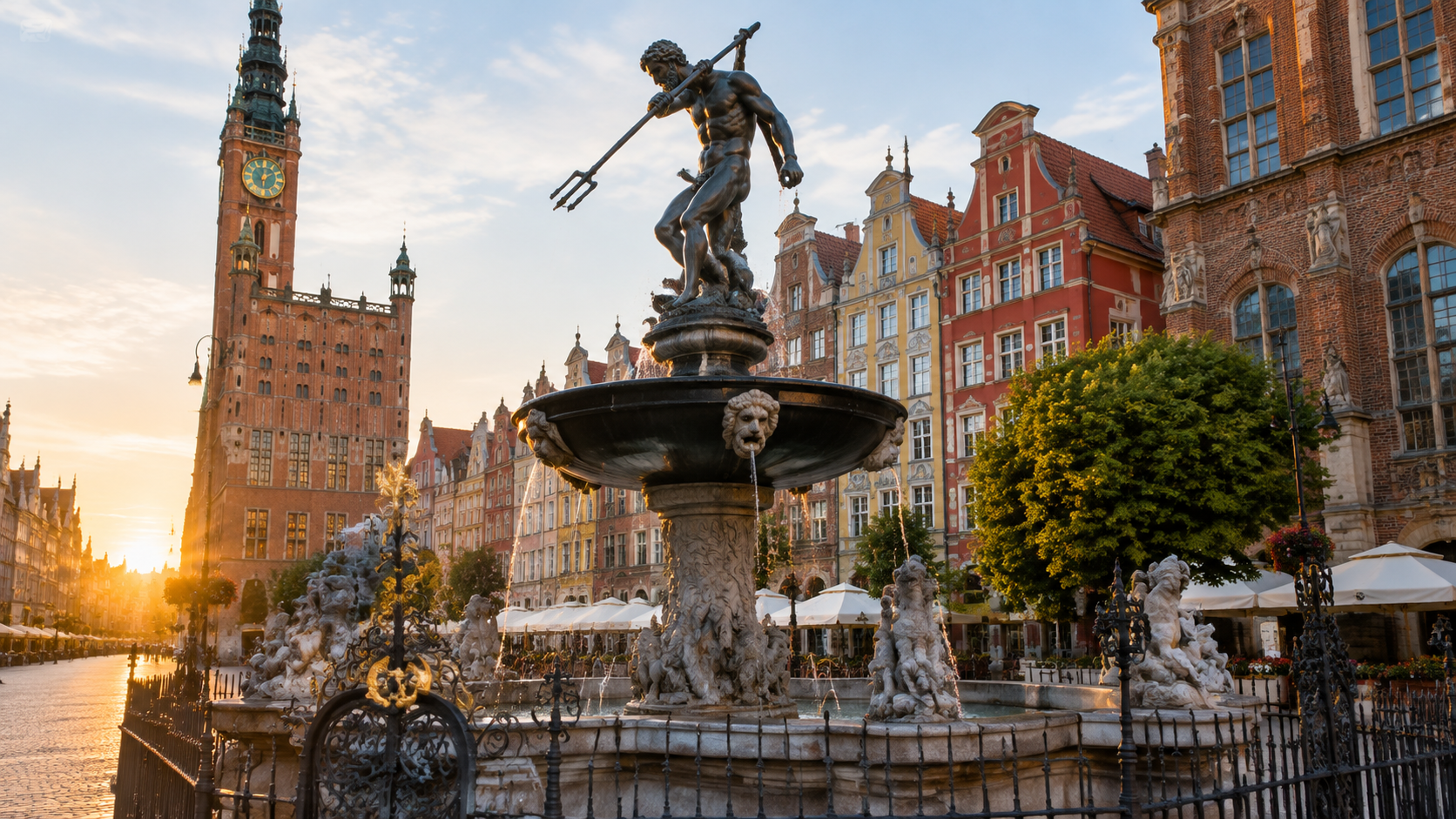
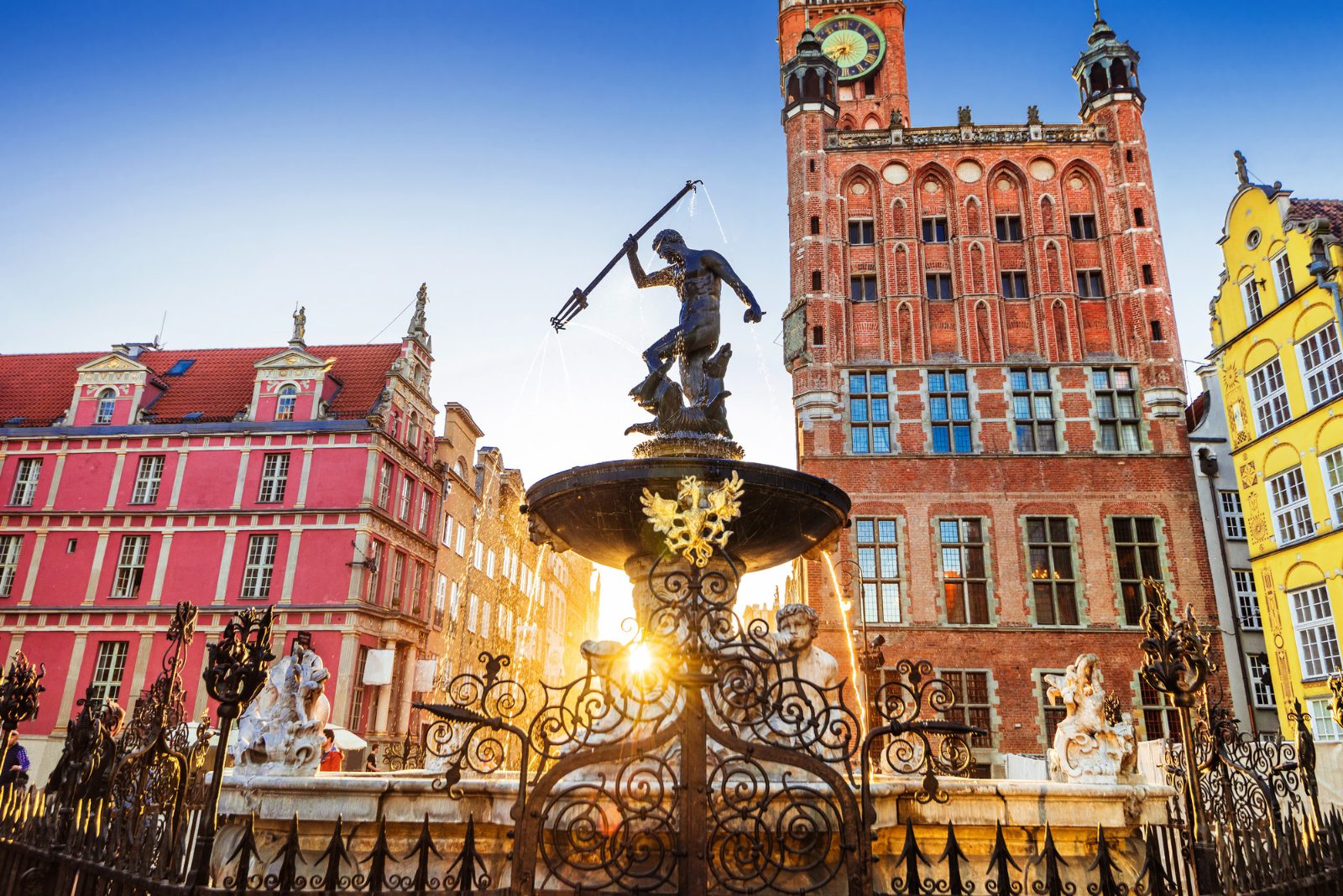
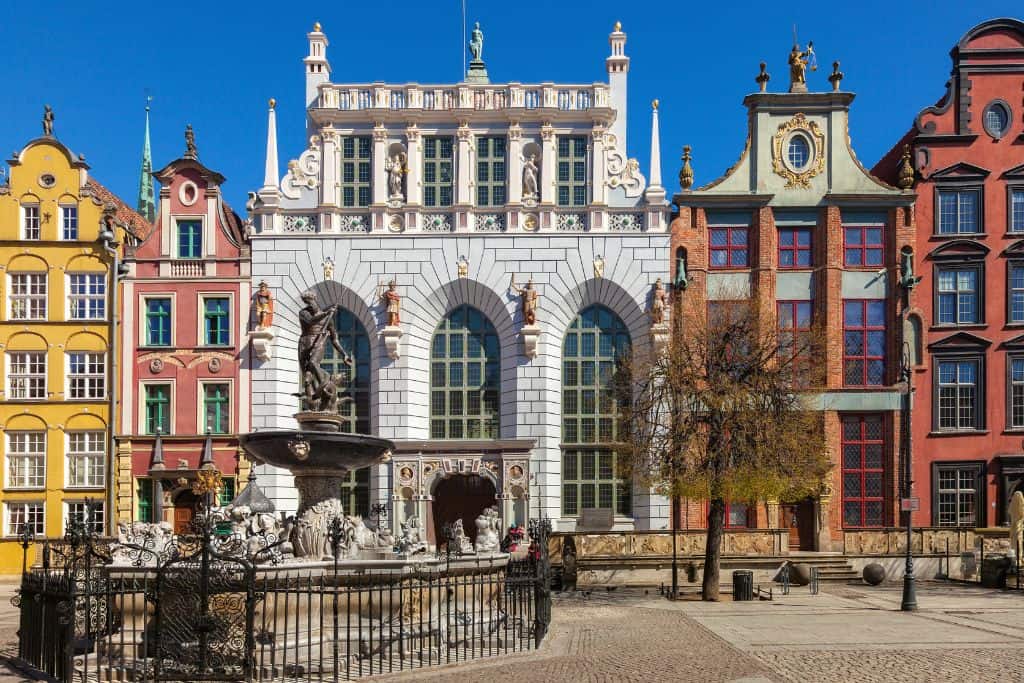
This iconic bronze statue has stood as a symbol of the city since 1633.
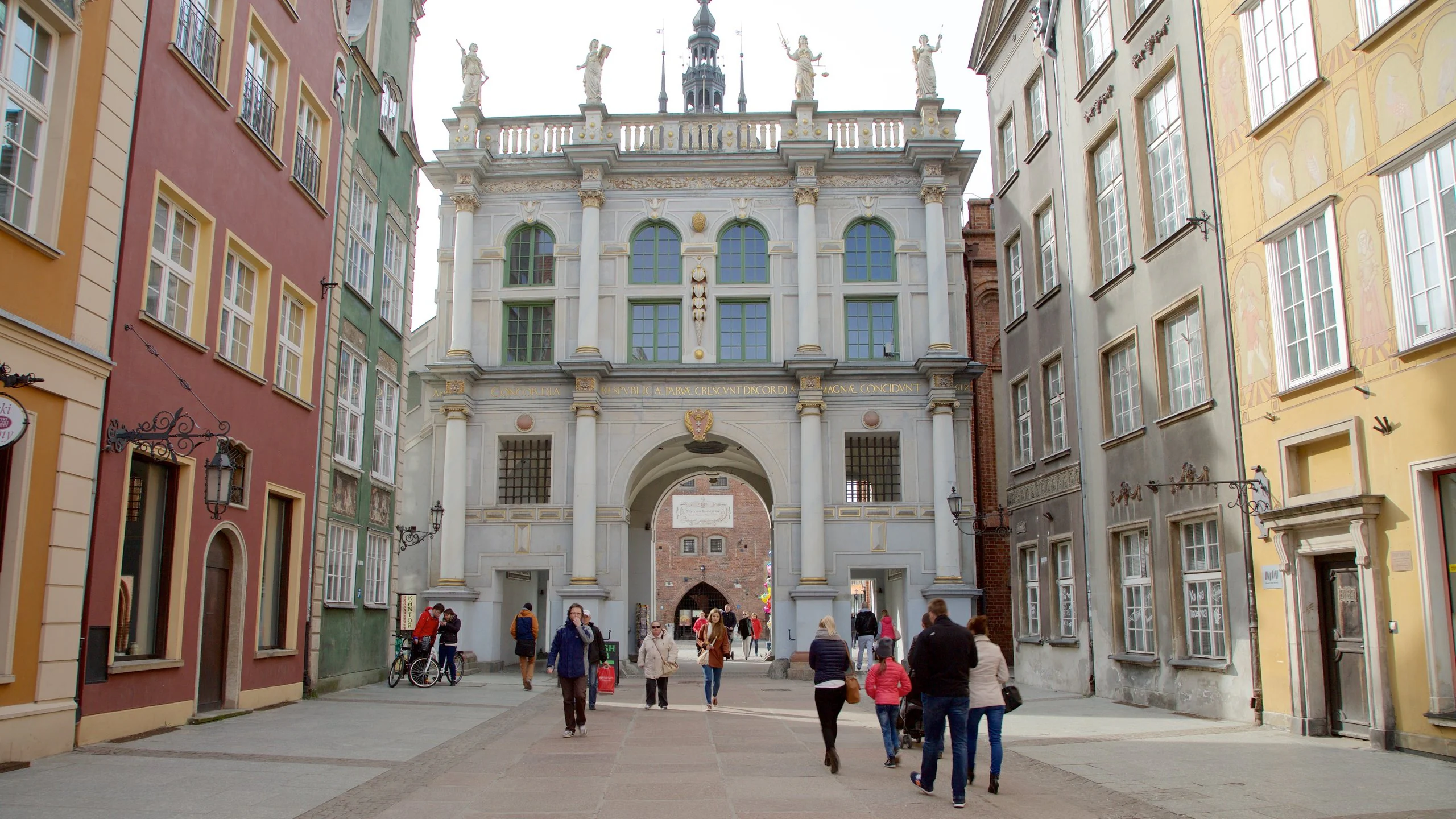
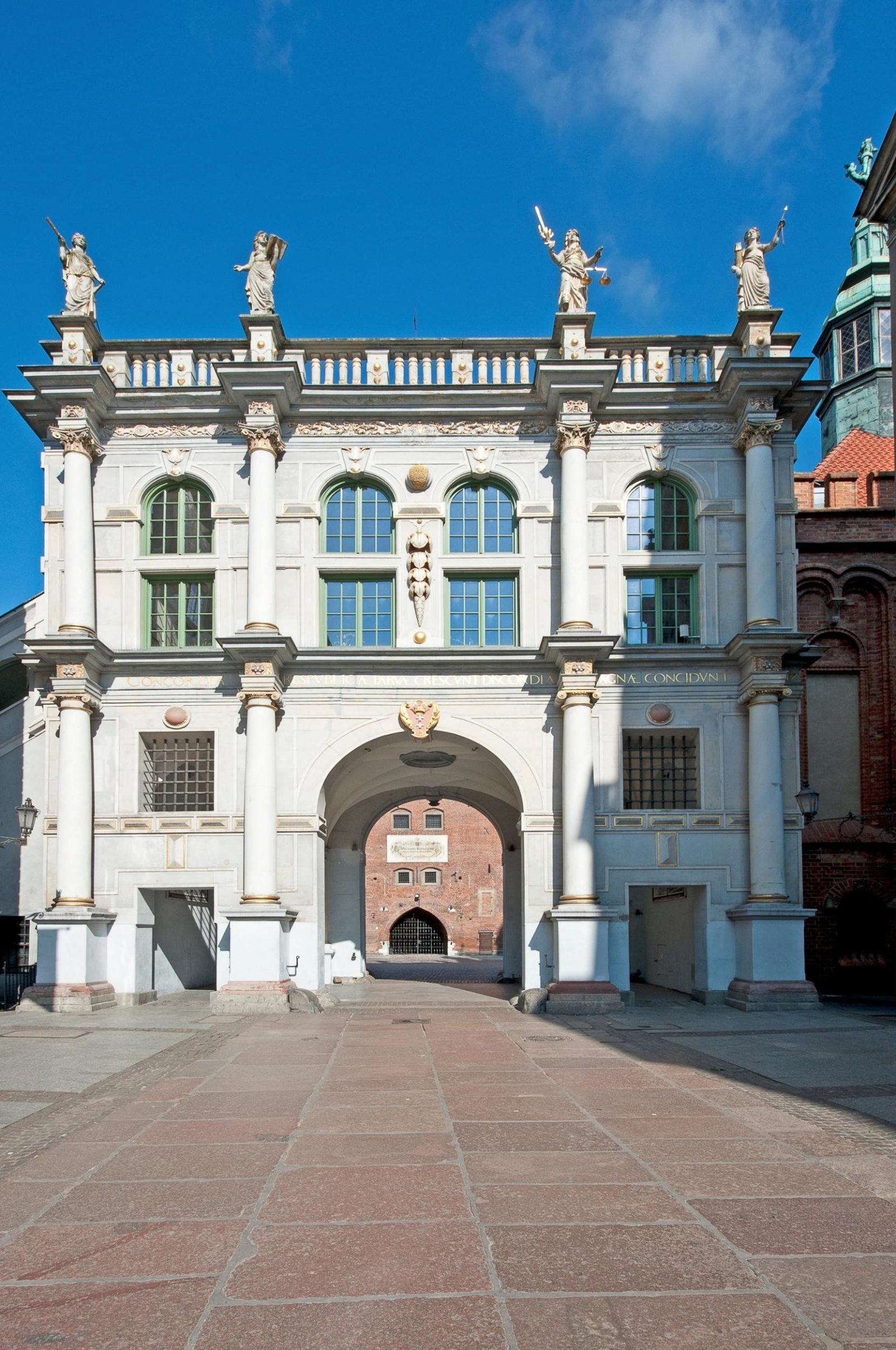
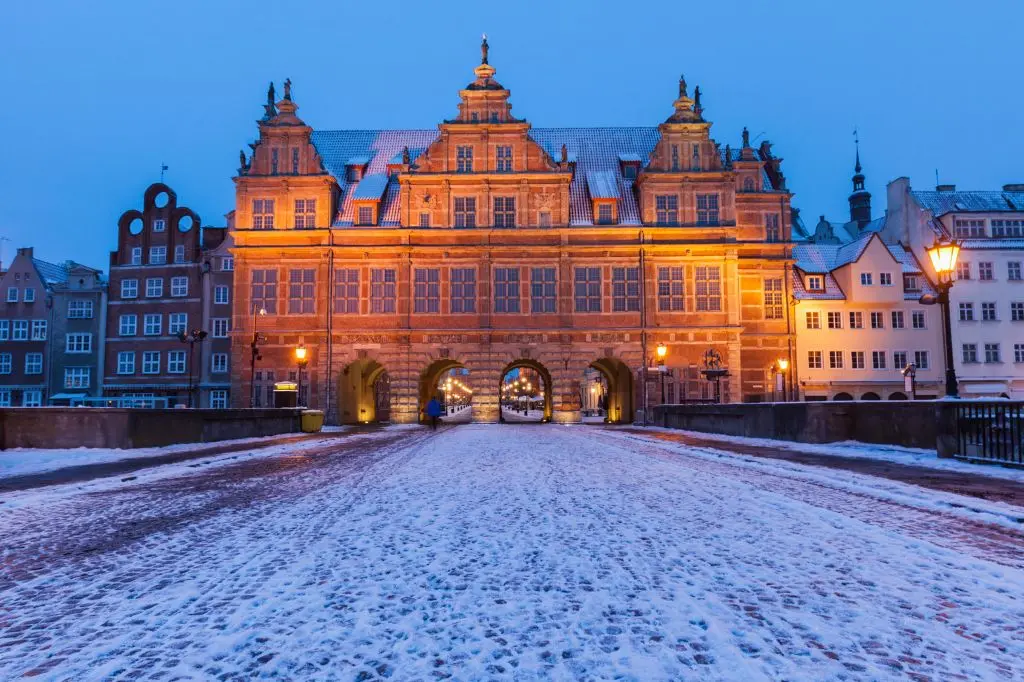
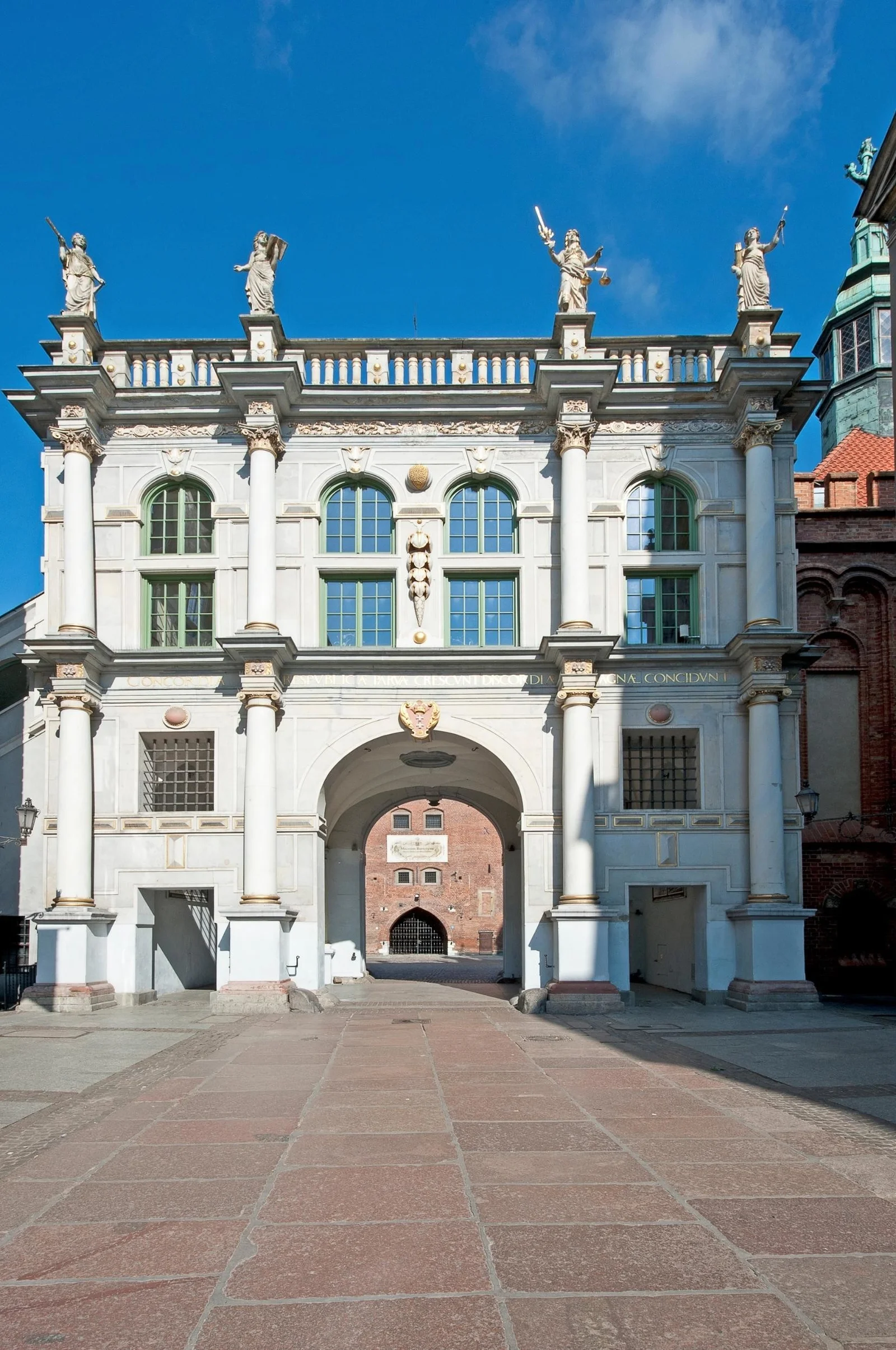
Constructed in 1612, this gate features decorative sculptures representing civic virtues.
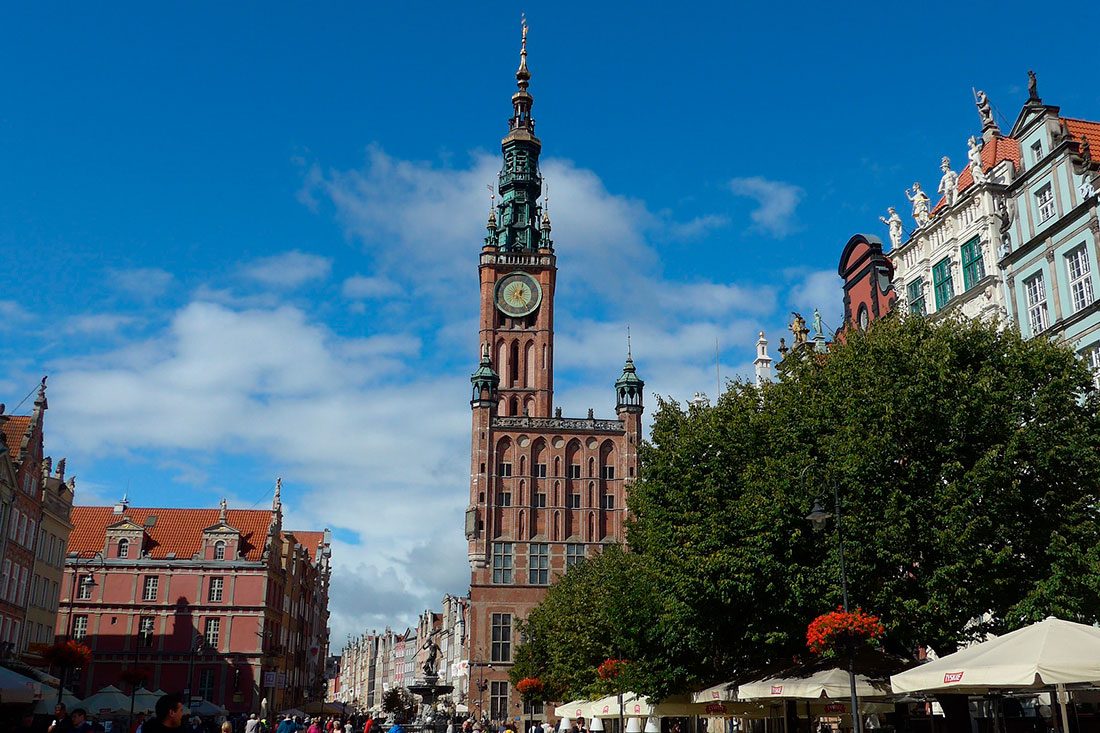
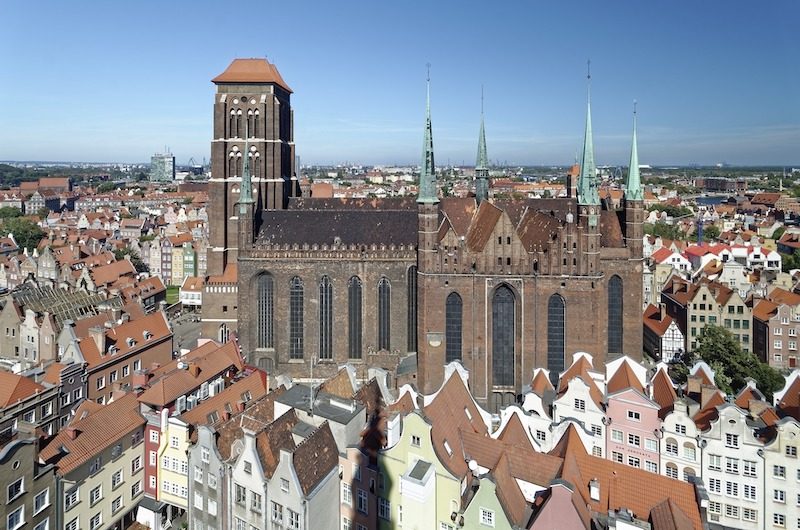
The tower features a carillon with 37 bells that perform regular concerts.
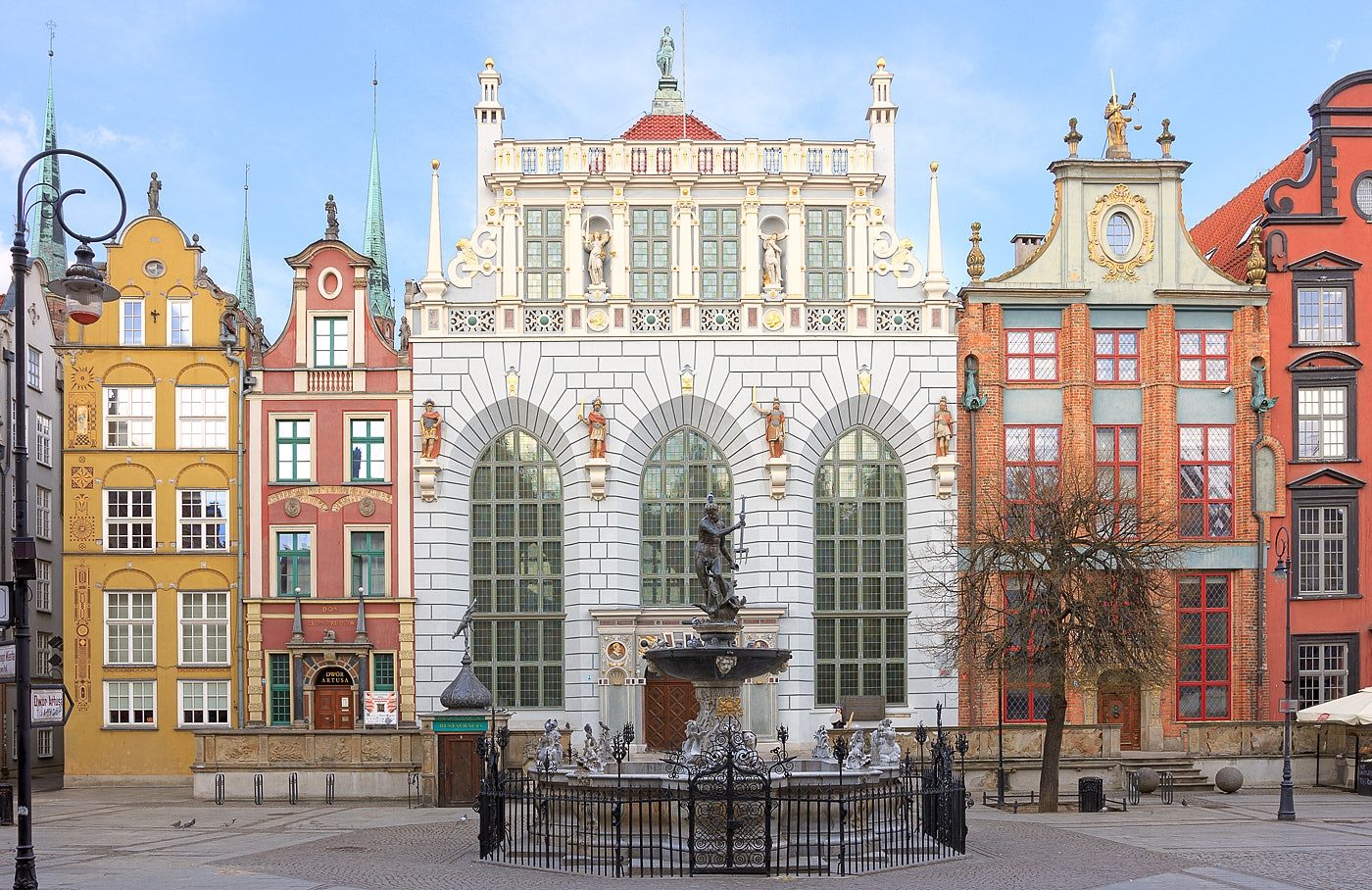
Historically, this building served as a gathering place for wealthy merchants and local nobility.
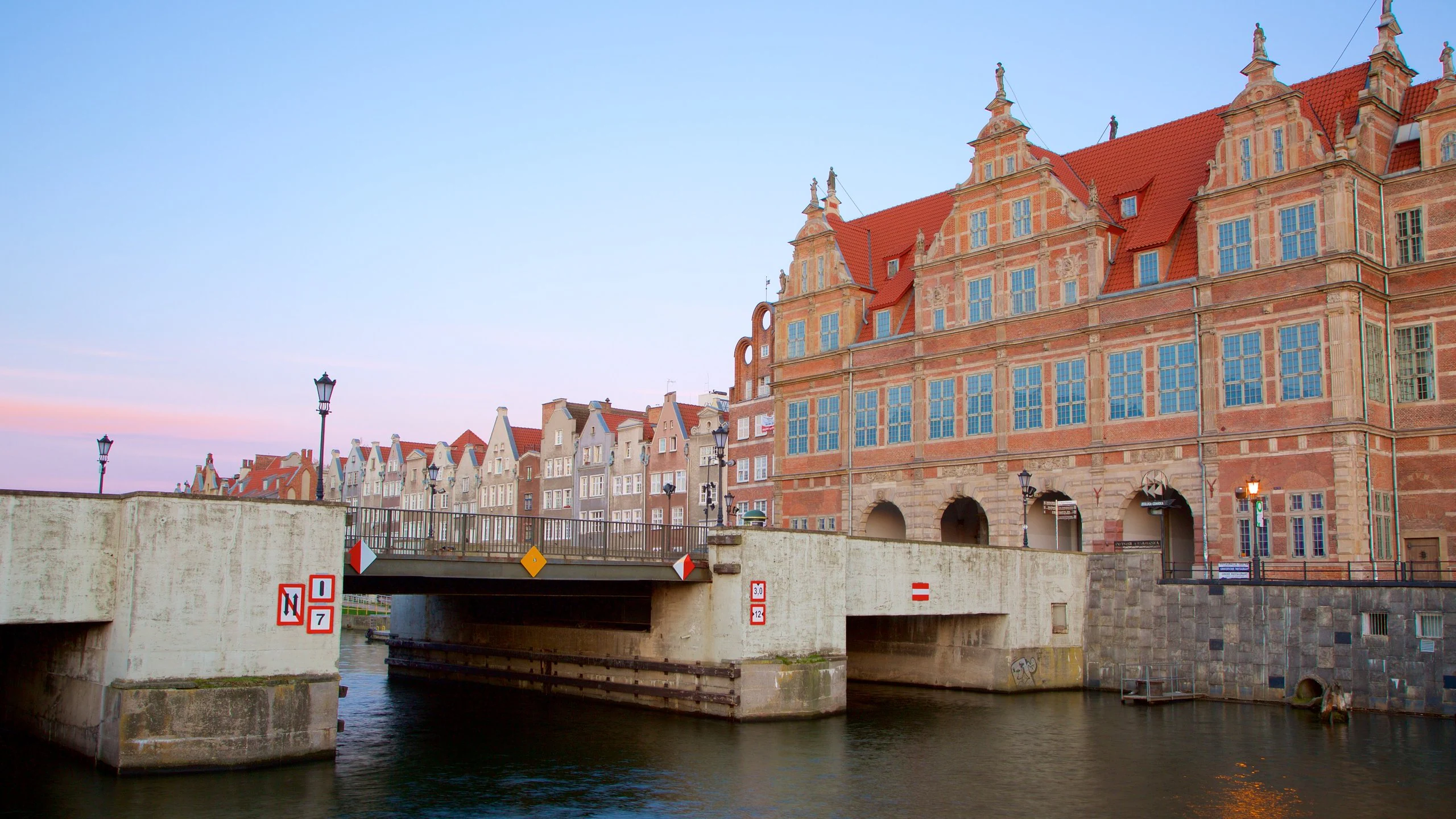
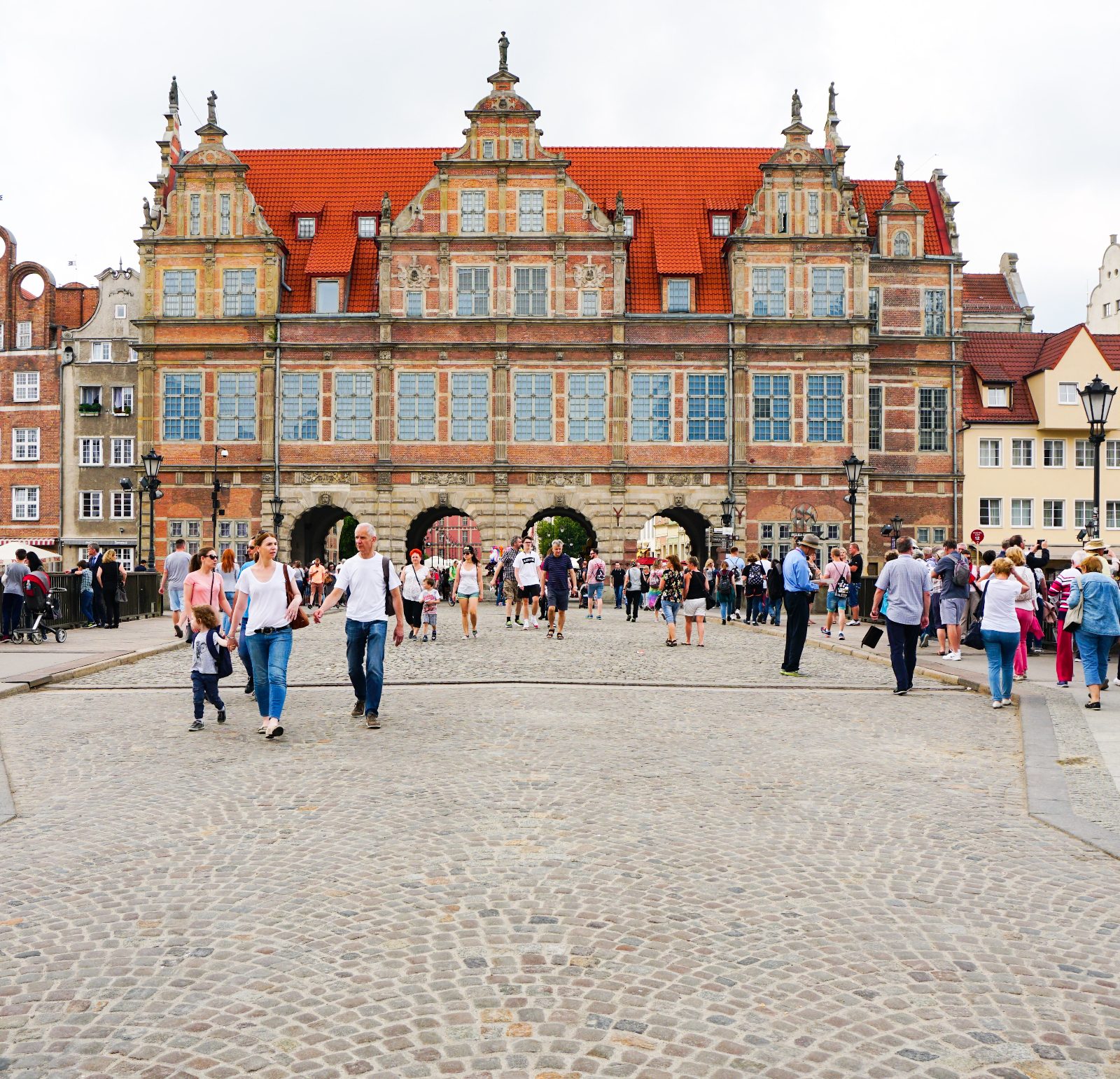
This late-Renaissance gate serves as the final decorative point on the Długi Targ passage.
Every Gdansk Walking tour side-by-side — duration, what's included, how you redeem.
| Experience | Duration | Rating | Pickup | Guide | Small group | Free cancel. | Price | |
|---|---|---|---|---|---|---|---|---|
|
Guided Experience Most popular
Gdańsk History & Architecture Walking Tour
|
2 hr 30 min | ★ 4.8 | — | ✓ | ✓ | ✓ | €25 | Book → |
|
Standard Entry
Gdańsk Electric Golf Cart City Tour
|
1 hr | ★ 4.9 | ✓ | ✓ | ✓ | ✓ | €6 | Book → |
|
Standard Entry
Golf Cart Sightseeing Tour of Gdansk
|
2 hr | ★ 4.9 | ✓ | ✓ | — | ✓ | €7 | Book → |
All prices from verified partners. Availability and exact terms confirmed at checkout.
Self-guided options offer total autonomy for exploring Old Town landmarks, while professional tours provide deep narrative context that enriches the experience. They complement each other; most visitors who do both call the guided gdansk walking tour tours the more informative approach for understanding local culture.
| Feature | Top pick Self-Guided Tour | Professional Guided Tour |
|---|---|---|
Cost |
0 PLN | 50–150 PLN |
Flexibility |
Complete freedom | Fixed schedule |
Depth of Information |
Limited to signage | Expert storytelling |
Social Interaction |
None | Group atmosphere |
Navigation Method |
Map or app | Live local guide |
Language Availability |
Self-directed | Multiple languages |
| See tickets → |
Verdict: Choose the independent gdansk walking tour ticket free route for a relaxed pace, or select a paid professional gdansk walking tour tour if you prefer structured insights and curated historical narratives.
Choose your ticket, select your date, and reserve in under two minutes. Secure checkout handled by our verified partner.
Instant confirmation by email, with a mobile voucher you can save offline. No printing, no queuing at a collection desk.
Arrive at the entrance, show your voucher on your phone, and walk in. Most tickets include priority or skip-the-line access.
Practical details for Gdansk Walking tickets straight from our verified partners — hours, access, rules, and how to get there.
Długa St
Main starting point for any gdansk walking tour.
Open in Google MapsUse tram lines 8 or 9 to reach the city center.
Accessible from the main railway station through Długa Street.
Wear comfortable walking shoes suitable for uneven historical pavements. Layers are recommended due to changing coastal weather patterns.
Keep belongings secure in a crossbody bag or backpack. Do not leave items unattended while observing landmarks on your gdansk walking tour.
Photography is permitted throughout all public areas. Respect the privacy of residents living in the Old Town.
Many historic streets feature cobblestones which may prove difficult for wheelchair users. Most major Gdansk sightseeing tours stick to primary thoroughfares for better accessibility.
Mobile devices are useful for navigation and translation. Ensure your device is fully charged before starting.
The area is pedestrian-friendly for strollers. Keep children close when navigating crowded squares during a gdansk walking tour.
Numerous cafes and restaurants operate along the route. Tap water is safe for consumption in public areas.
Dogs are permitted if kept on a leash at all times. Please clean up after your animal throughout the excursion.
Maintain situational awareness in high-traffic zones. Plan your gdansk walking tour around local events to avoid unexpected closures.
Best time to go, insider tips, nearby landmarks, and the cancellation fine print — flip through to skim what matters to you.
How crowds, weather, and events shift across the year.
Mild weather and fewer visitors make for comfortable exploration.
Expect high foot traffic and warm temperatures in the Old Town.
Early mornings provide excellent lighting for a gdansk walking tour.
Cold temperatures require warm gear but offer a peaceful atmosphere.
Small details that turn a good visit into a great one.
Begin your gdansk walking tour between 09:00–11:00 to avoid crowds.
Prioritize comfort over style due to uneven stone surfaces.
Download an offline map of the city for easier movement.
Capture images of the facades during the soft morning light.
Carry a reusable bottle as fountains are available nearby.
Non-bookable sights within a short walk — free to visit, easy to pair.
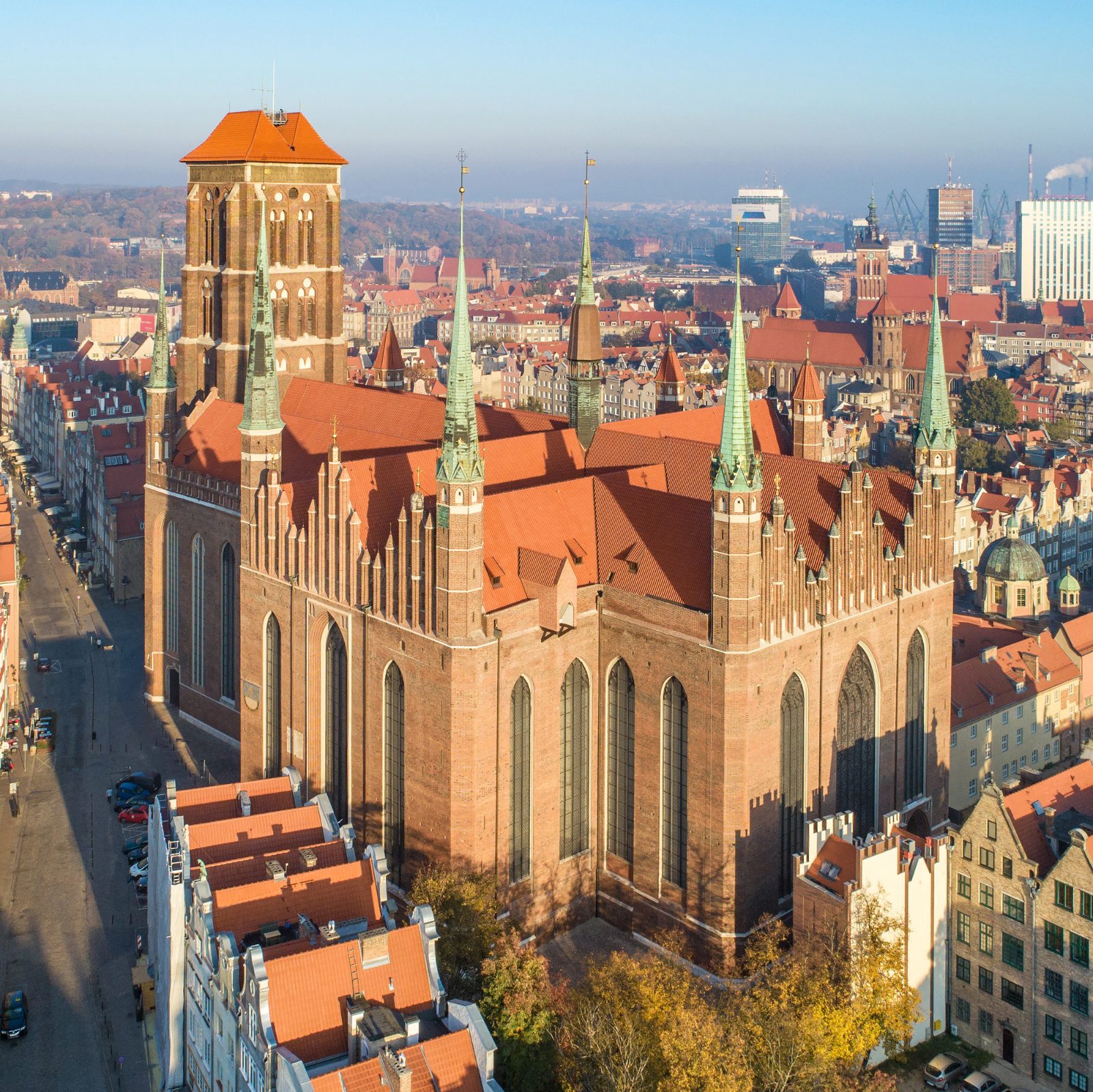
Large brick Gothic basilica featuring an astronomical clock.
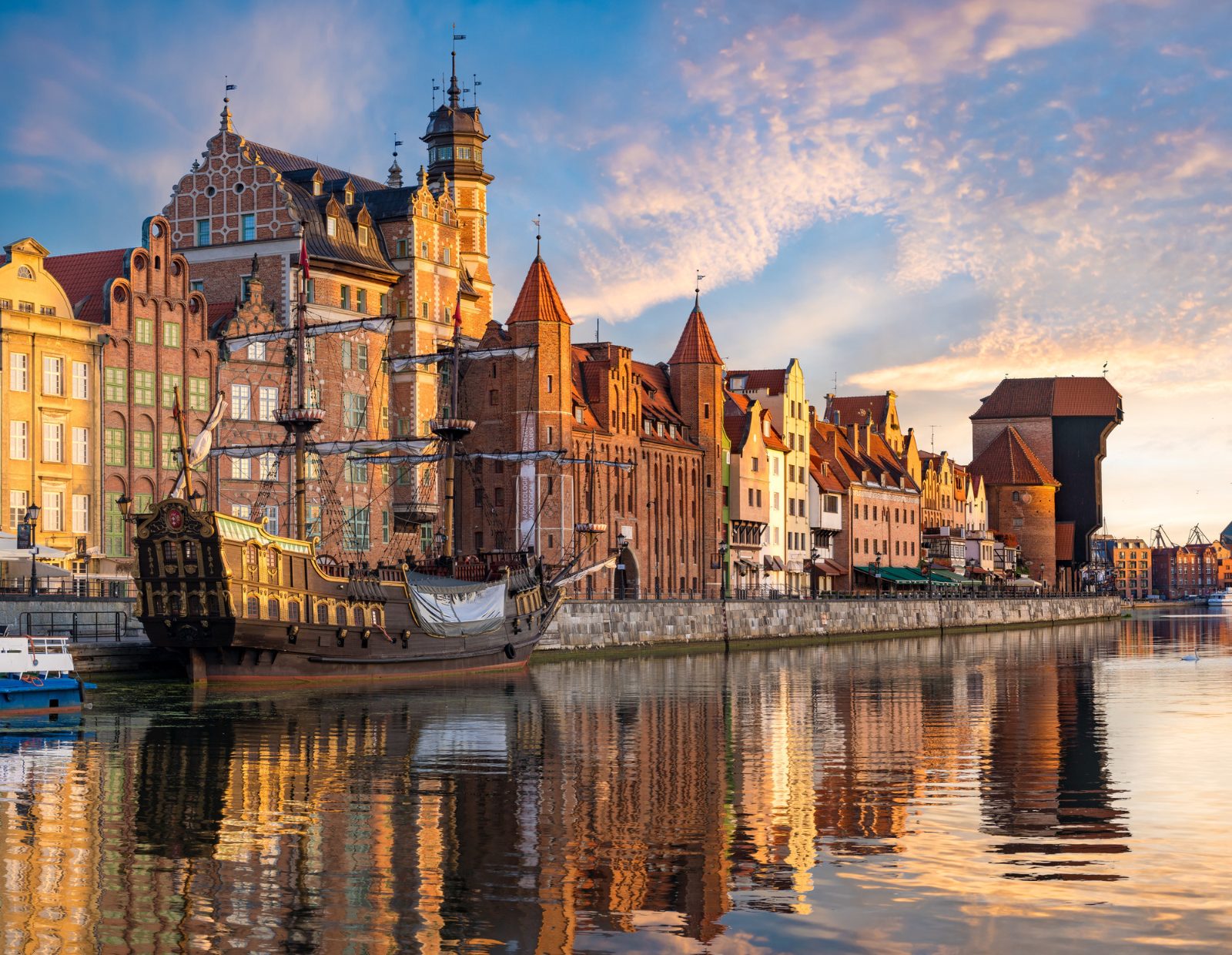
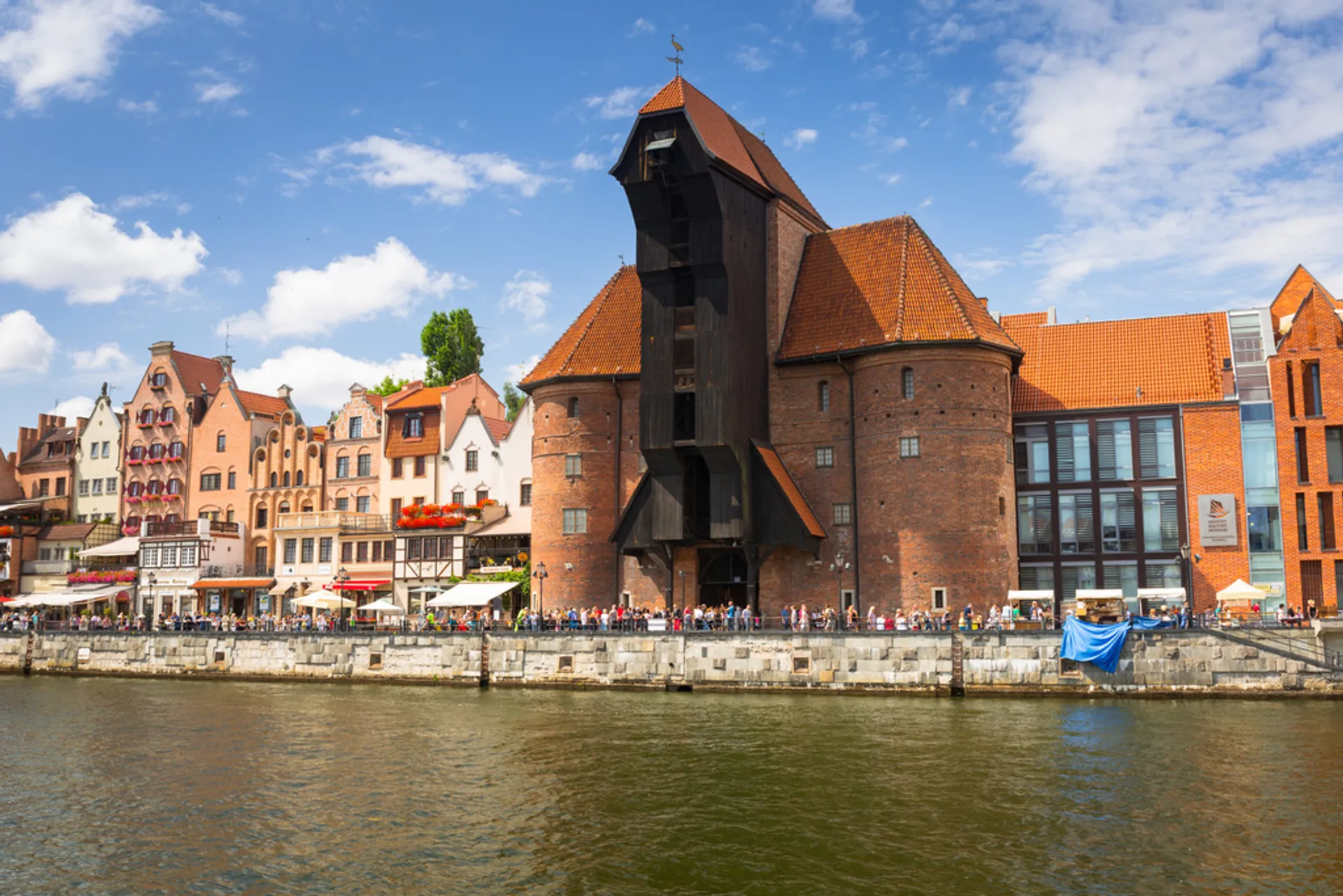
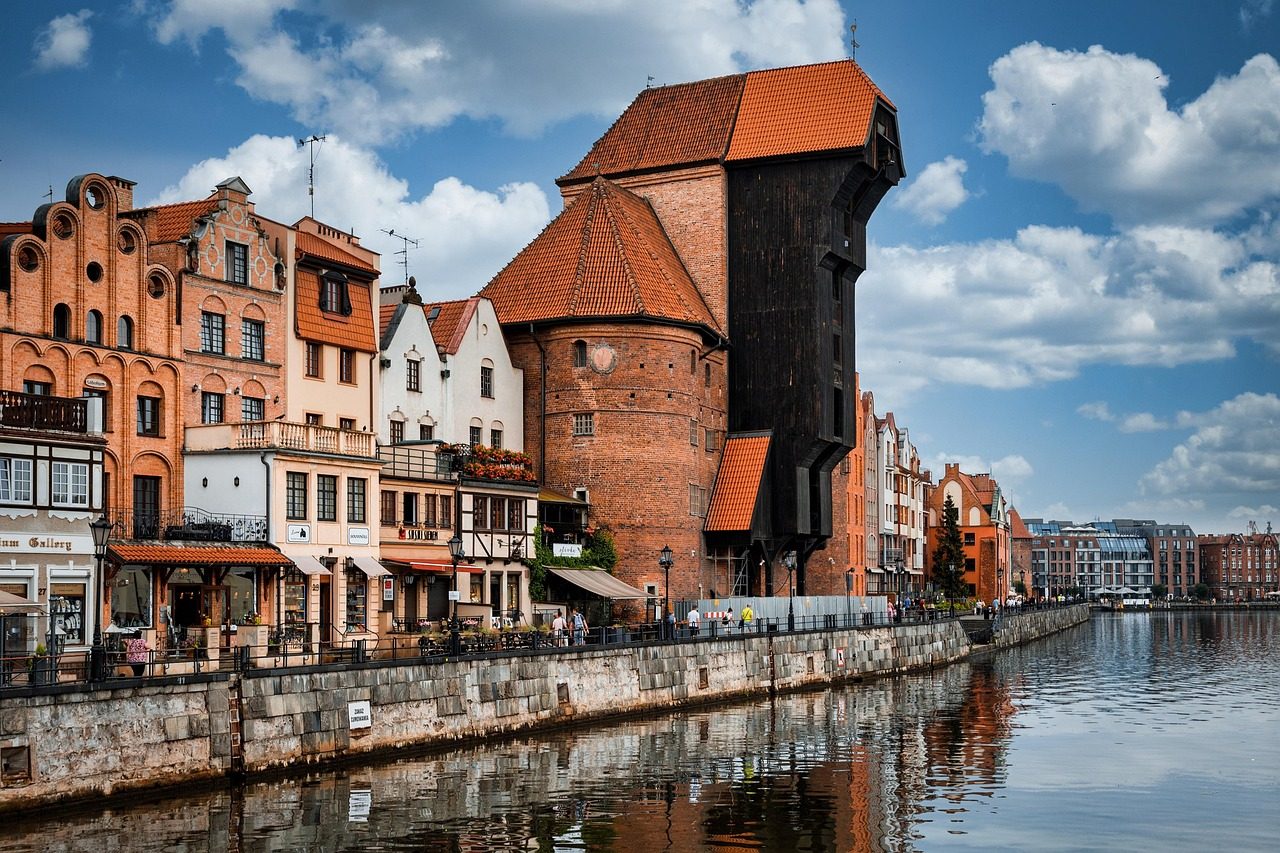
Historical port crane representing medieval maritime technology.
Former merchant meeting place with ornate interior design.
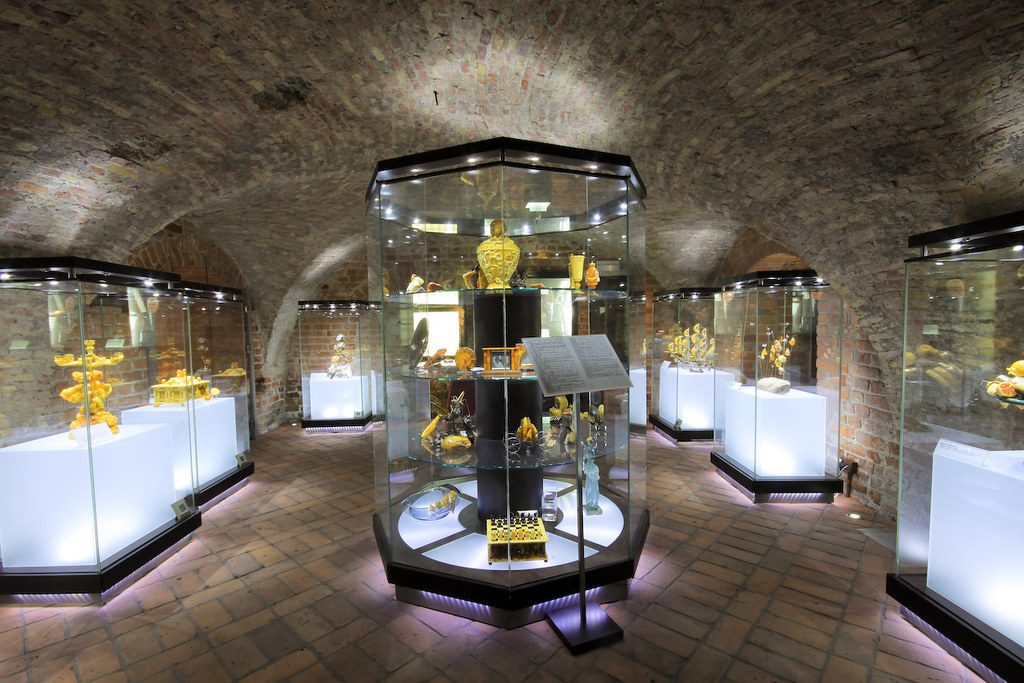
Displays local Baltic amber collections in a historic tower.
Flexible, no hidden fees.
Self-guided routes require no booking. There is a 0 PLN entrance fee for this gdansk walking tour.
Hand-picked options within walking distance — pick a district for vibe, or a specific hotel for convenience.
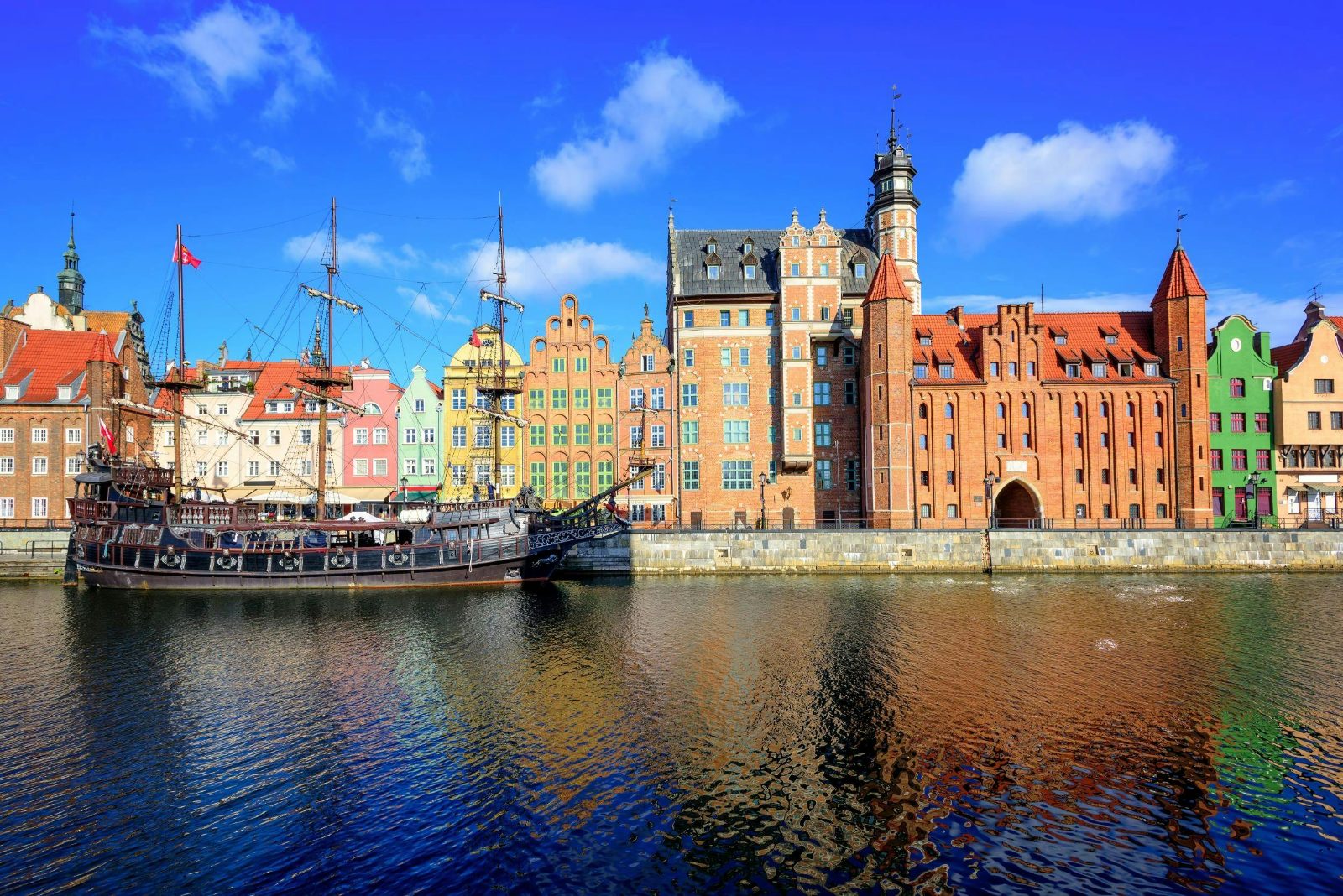
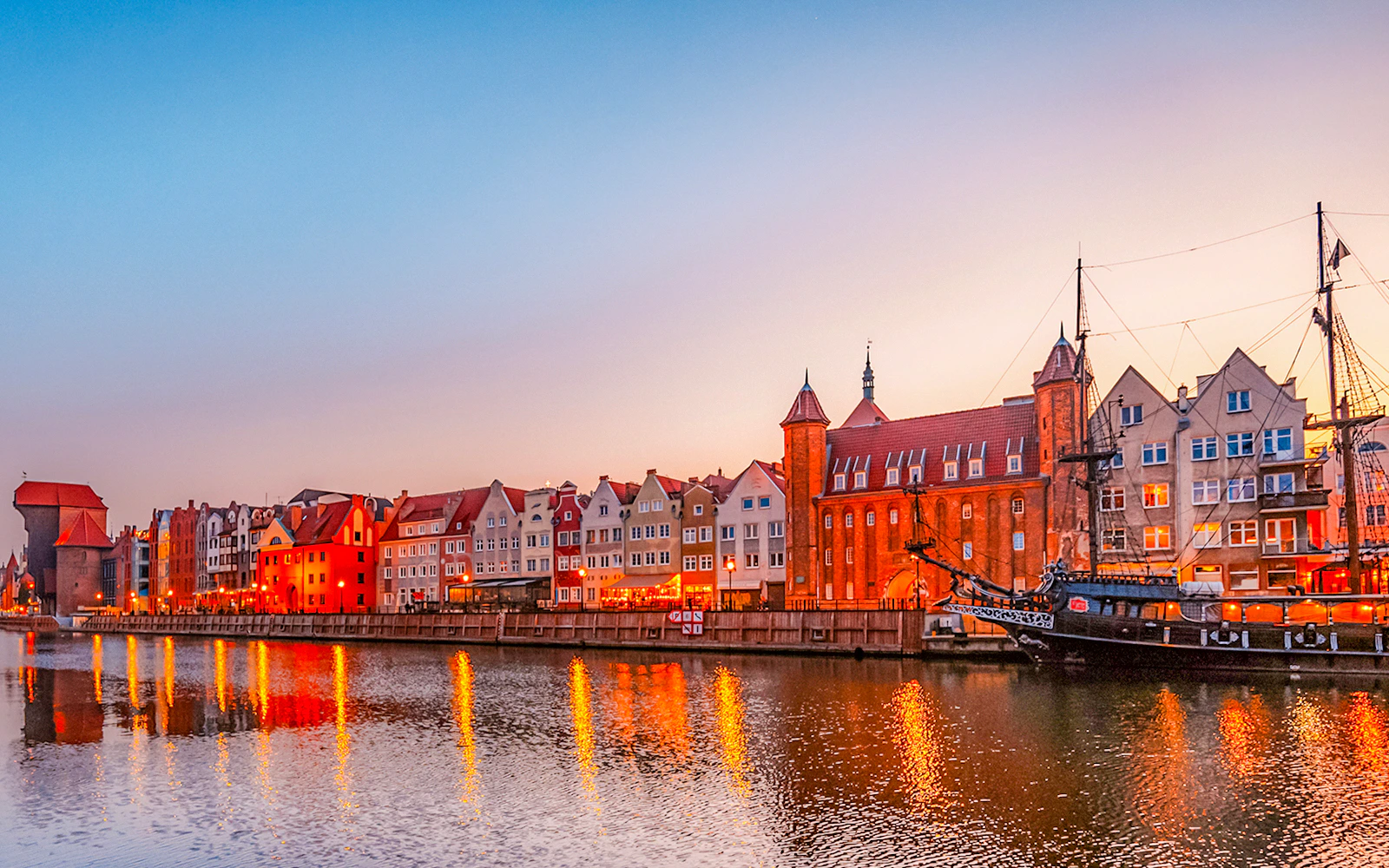
Gdańsk's Old Town was rebuilt brick by brick after 1945, when ninety percent of its medieval core lay in ruins. Each gabled facade along Długi Targ — the Long Market — is a postwar reconstruction, its proportions and ornament drawn from prewar photographs and the surviving fragments of Hanseatic burgher houses.
The city's merchant guilds commissioned these narrow-fronted buildings in the sixteenth and seventeenth centuries, their wealth drawn from the grain trade that flowed down the Vistula and out through the Baltic. Today the Royal Way runs from the Golden Gate to the Green Gate, a five-hundred-metre corridor that compresses six centuries of architecture into a single pedestrian axis.
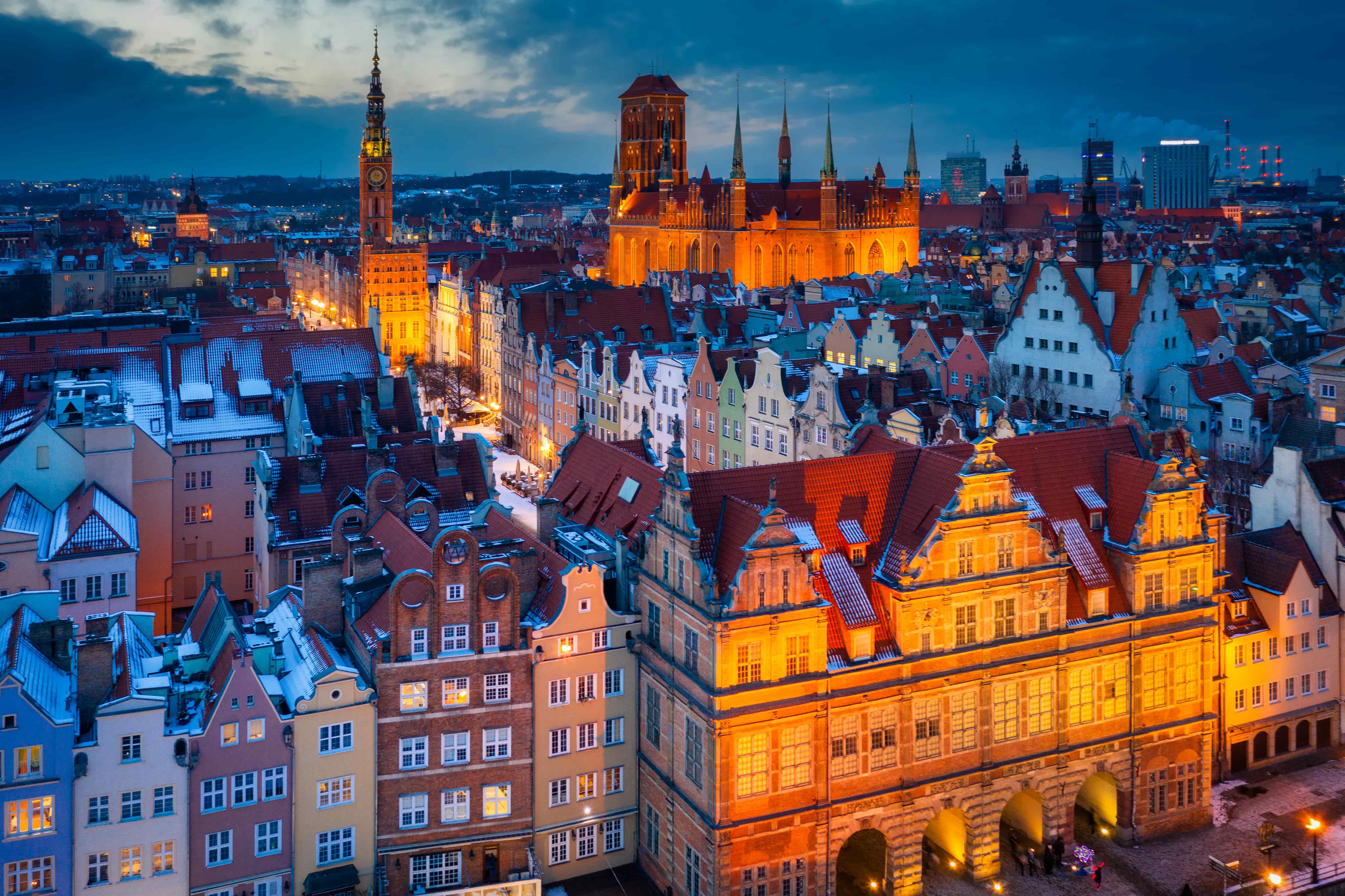
The Gothic mass of St. Mary's Basilica anchors the eastern edge of the historic district. Construction began in 1343 and continued for a hundred and fifty-nine years, leaving behind a brick nave that seats twenty-five thousand and a tower that rises seventy-eight metres above the cobbles. The interior holds a fifteen-metre astronomical clock completed in 1470, its dial tracking the position of the sun and moon against a painted zodiac. The basilica's treasury contains Memling's Last Judgment triptych, a Flemish altarpiece commissioned in 1467 and seized by privateers en route to Florence, then claimed by Gdańsk and displayed here for five and a half centuries.
The European Solidarity Centre stands three kilometres north of the Old Town, a rust-coloured volume of weathering steel that commemorates the 1980 shipyard strikes. The Gdańsk Shipyard was the birthplace of the Solidarity trade union, the first independent labour movement in the Eastern Bloc. The centre's permanent exhibition spans three floors and documents the strikes, martial law, and the negotiations that preceded the 1989 elections. Outside, three steel crosses mark the spot where militia shot striking workers in December 1970. The shipyard itself remains partially operational, though its workforce has declined from seventeen thousand in 1980 to fewer than two thousand today.
The waterfront district of Gdańsk stretches along the Motława River, its granaries and loading cranes converted into galleries and cafes. The medieval port crane — Żuraw — is the largest preserved treadwheel crane in Europe, its twin wooden wheels once lifting four tonnes of cargo to the upper floors of the waterfront warehouses. The Motława promenade connects the Old Town to the modern marina, passing the amber trade stalls and the Maritime Museum's collection of ship models and navigational instruments. Gdańsk remains the global centre of amber processing, with eighty percent of the world's Baltic amber passing through its workshops and exchanges.

"Each gabled facade along Długi Targ is a postwar reconstruction, its proportions drawn from prewar photographs and surviving fragments."
A step-by-step walkthrough of Gdansk Walking tickets — what you'll see, how long each stage takes, and the details that matter.
You begin at the Golden Gate, where Długi Targ opens onto a corridor of reconstructed merchant houses. The cobbles are uneven beneath your feet, worn smooth by four decades of tourist traffic and the occasional delivery van.
You pass the Neptune Fountain, its bronze figure darkened by centuries of exposure, and continue east toward the twin towers of St. Mary's. Inside, the nave stretches into shadow, the brick vaulting supported by twenty-seven columns. You climb the tower's four hundred and nine steps, pausing at each landing to catch your breath, until the rooftops of the Old Town spread beneath you in a grid of terracotta and slate.
From the basilica you walk north along Piwna Street, the cafes giving way to residential blocks as you approach the shipyard. The European Solidarity Centre rises ahead, its angular form clad in rust-red steel. You enter through the ground-floor lobby and take the escalator to the third floor, where the permanent exhibition begins. The displays are chronological, each room dedicated to a single year of the movement. You spend an hour reading transcripts and watching archival footage, then descend to the waterfront. The Motława promenade runs south toward the Old Town, the medieval crane visible against the evening sky. You stop at a bench near the amber stalls and watch the tourist boats return to the marina.
The city route is open 24 hours daily. You can visit at any time during your gdansk walking tour.
No, there is a 0 PLN entrance fee for this self-guided gdansk walking tour.
The best arrival window is 09:00–11:00 to avoid crowds and get better lighting.
Yes, bags are allowed as you explore the gdansk walking tour landmarks independently.
Yes, photography is allowed throughout the public space while participating in a gdansk walking tour.
Many areas are accessible, but cobblestones may make some streets challenging on a gdansk walking tour.
Public restrooms are available at various cafes and landmarks near the gdansk walking tour route.
Yes, pets are permitted on a leash while completing your gdansk walking tour.
Bring comfortable shoes, water, and a camera for your gdansk walking tour.
Yes, combine your walk with nearby landmarks like the Crane or St. Mary's Church.